
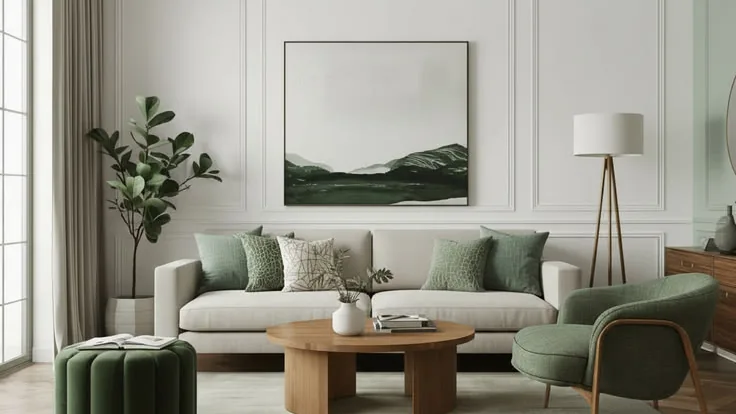
There’s a common assumption that a home only looks “expensive” if you’ve spent a lot on it. In reality, high-end-looking interiors usually come down to a handful of design decisions — not a big budget. This holds especially true for interiors in Bangalore, where apartment sizes are often modest but design possibilities aren’t. Color, lighting, and how you arrange what you already have can do more for a room than an expensive sofa ever will.
Here’s where to actually put your money and effort if you want your home to feel elevated rather than makeshift.
Start With a Cohesive Color Palette
Before touching furniture or décor, get your color story right — it affects how “put together” a space feels more than almost anything else.
Stick to a Maximum of Three Colors Per Room
Homes that look expensive rarely use more than two or three core colors per room — a neutral base, one accent, and a grounding tone like wood or black. Random pops of color are what make budget spaces look cluttered. Warm off-whites and soft greys also give more depth than stark white, for the same price.
Prioritize Lighting Over Furniture
If there’s one place to spend slightly more, it’s lighting. Poor lighting makes even expensive furniture look cheap.
Layer Your Lighting Instead of Relying on One Source
A single ceiling light creates flat, harsh shadows. Add a floor lamp or wall sconces to create layers of light — one of the fastest ways to make a room feel considered. Switching to warm white bulbs (2700K–3000K) instead of cool daylight ones also makes a space feel cozier, at no extra cost. Dimmers, if your budget allows, let you shift a room’s mood in seconds.
Get Strategic with Furniture Placement
Expensive-looking homes rarely have more furniture than budget homes — they just place what they have more intentionally.
Leave Breathing Room and Add One Statement Piece
Cramming furniture against every wall makes a room feel like storage. Pulling a sofa slightly away from the wall instantly makes a room feel more deliberate. You don’t need every piece to be expensive — you need one piece that draws the eye, like a well-chosen accent chair or textured rug. Mixing in textures — a woven basket, linen throw, or rattan lamp — adds depth without adding cost.
Use Mirrors to Instantly Elevate a Space
Mirrors are one of the most underused low-cost tools in interior design.
Make Small Rooms Feel Larger
A well-placed mirror reflects light and visually doubles a room’s depth, especially useful in space-constrained apartments. Position it opposite a window to maximize natural light bounce, and consider a curved or textured frame — it adds a design element on its own, often for a similar price to a plain one.
Hardware, Curtains, and Greenery
Old, mismatched handles and knobs are an instant giveaway of a low-budget space. Swapping them for simple matte-black or brushed-brass hardware is inexpensive but changes the entire feel of kitchens and wardrobes. Floor-length curtains in a solid, heavier fabric make ceilings feel taller, without needing to be expensive — just well-fitted. A large plant in a well-chosen pot also does more for a room than most décor at a similar price.
Declutter Before You Decorate
This costs nothing and might be the single highest-impact thing on this list. Expensive-looking homes almost always have less visual clutter, not more décor. Before buying anything new, remove anything that doesn’t serve a clear function — visible wires and mismatched storage boxes are the biggest culprits. Closed cabinets and baskets keep everyday clutter out of sight while keeping the room visually calm.
Budget-Friendly Upgrades Worth Prioritizing
Rough priority order based on visual impact per rupee spent:
- Paint and lighting — highest impact, lowest cost
- Curtains and hardware swaps — noticeable difference, moderate cost
- One statement furniture piece — anchors the whole room
- Mirrors and greenery — finishing touches that tie everything together
- New furniture sets — lowest priority; often unnecessary if the above are done well
Conclusion
A home doesn’t need a big budget to look expensive — it needs intentional choices. Getting your color palette, lighting, and furniture placement right does more for how a space feels than any single expensive purchase. Start with what costs the least — decluttering, paint, and lighting — before spending on anything new.
If you’re planning a full home renovation and want these choices built in from the start, working with an experienced interior design company in Bangalore can help you plan layouts, lighting, and finishes that make budget-friendly design easier to execute.