
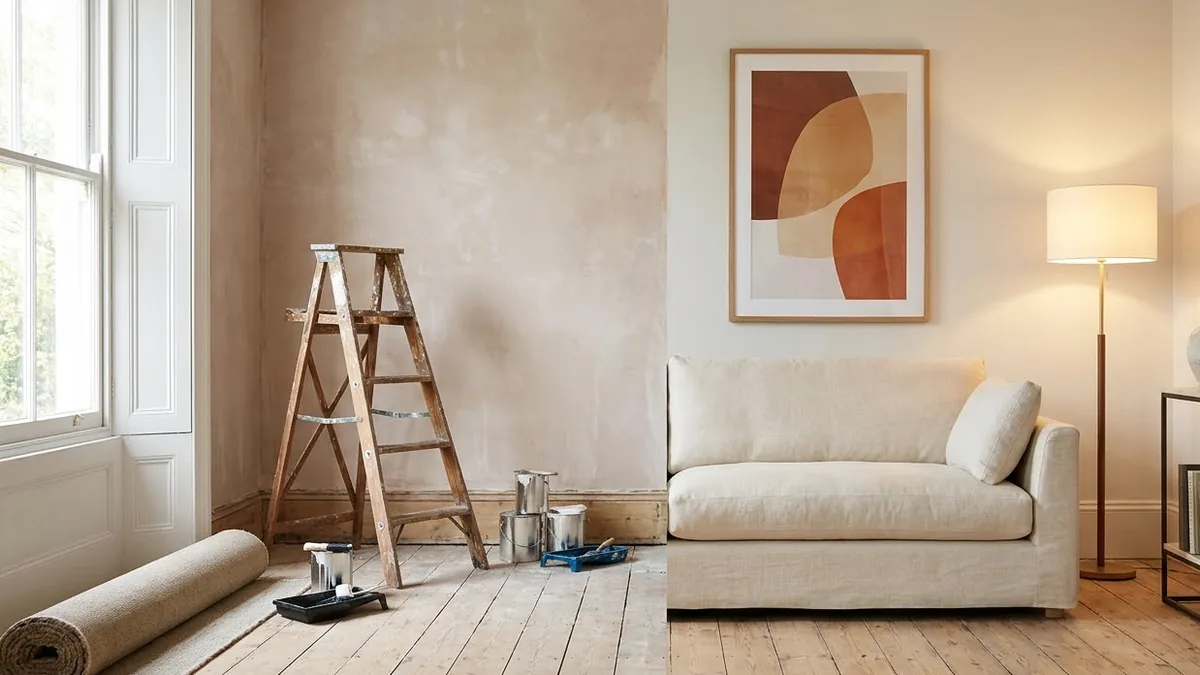
A makeover and a renovation are not the same job, and confusing the two is how budgets get set wrong.
A renovation changes the building — walls move, plumbing relocates, layouts change, sometimes structure is touched. A makeover changes how the home looks and functions without altering it structurally: surfaces, storage, lighting, joinery and finishes.
Most homes in Bangalore that feel tired do not need a renovation. They need a makeover, and the difference in cost and disruption is substantial.
What a Makeover Typically Covers
- Painting, interior and often exterior
- Flooring — replacement, or overlay where the existing floor is sound
- Modular kitchen — new units, or refacing shutters and replacing hardware on a sound carcass
- Wardrobes and storage, either new or refitted internally
- False ceiling and lighting, usually the highest-impact item on the list
- Bathroom refresh — fittings, sanitaryware and tiling without moving plumbing points
- Doors, windows and hardware
- Soft furnishings — curtains, blinds, upholstery
- Waterproofing and damp repair where needed, which in Bangalore is more often than people expect
What it does not cover: moving walls, changing the plumbing layout, altering the electrical load, or anything structural. The moment a job needs those, it is a renovation and should be scoped and priced as one.
What It Costs
Makeover budgets are driven by scope, not by home size alone, but these ranges are a reasonable starting point for Bangalore:
| Scope | 2 BHK | 3 BHK |
|---|---|---|
| Cosmetic refresh — paint, lighting, minor repairs | ₹1.5 – 3 lakh | ₹2.5 – 4.5 lakh |
| Moderate — above, plus flooring or kitchen | ₹3 – 7 lakh | ₹5 – 11 lakh |
| Full makeover — all surfaces, kitchen, wardrobes, bathrooms | ₹7 – 12 lakh | ₹11 – 20 lakh |
Two factors move these ranges more than anything else: how much of the existing work is reusable, and how much of the cost is materials you could have chosen differently. A sound kitchen carcass that only needs new shutters and hardware saves a great deal over a full replacement.
Where a Limited Budget Does the Most
If the budget is smaller than the wish list, spend it in this order:
- Fix the causes first. Damp, seepage and leaking joints will destroy new paint and new woodwork within a monsoon. This is not optional, and it is the one item worth over-spending on.
- Lighting. The single largest change in how a home feels per rupee spent. Layered lighting transforms rooms that new furniture would not.
- Paint. Cheap, disruptive for a few days, and it resets the entire home.
- Kitchen hardware and shutters. Daily-use improvement without the cost of a full replacement.
- Flooring. Higher cost and more disruption, so worth doing only where the existing floor is genuinely beyond help.
- Decorative panelling and feature walls. Last. These are what people start with and should finish with.
How Long It Takes, and Whether You Can Live Through It
A cosmetic refresh usually runs 2–4 weeks. A moderate makeover 4–8 weeks. A full makeover 8–12 weeks, sometimes more if custom joinery is involved.
Living in the home during the work is possible for a cosmetic refresh and difficult for anything more, particularly once flooring or kitchen work begins. If you plan to stay, agree a room-by-room sequence with the contractor at the start so you always have a usable bedroom and bathroom.
In an apartment, check the association’s rules early: permitted working hours, lift usage, debris removal charges and any deposit. These affect the timeline more than most owners anticipate.
Choosing Who Does It
Makeovers attract a wide range of providers, from individual contractors to full interior firms. What to check regardless:
- A written, room-by-room scope listing inclusions and exclusions
- Named materials and brands, not “premium quality”
- A payment schedule linked to milestones, not dates
- Photographs of completed makeovers, not new-build interiors — the skills differ
- A clear position on the existing condition: what they will repair, what they will work around, and what they will not warrant
The last one matters most. A contractor who paints over damp without saying so has handed you a problem that will resurface, literally, in a few months.
Conclusion
A home makeover is the highest-return work you can do on a house that is structurally fine but tired. Fix the underlying problems first, put the money into lighting and surfaces rather than decoration, get the scope written down room by room, and be realistic about living through it.
Our home renovation service covers exactly this kind of work. If you’d like a room-by-room makeover plan and an honest view of what your home actually needs — and what it doesn’t — we’re happy to take a look.