
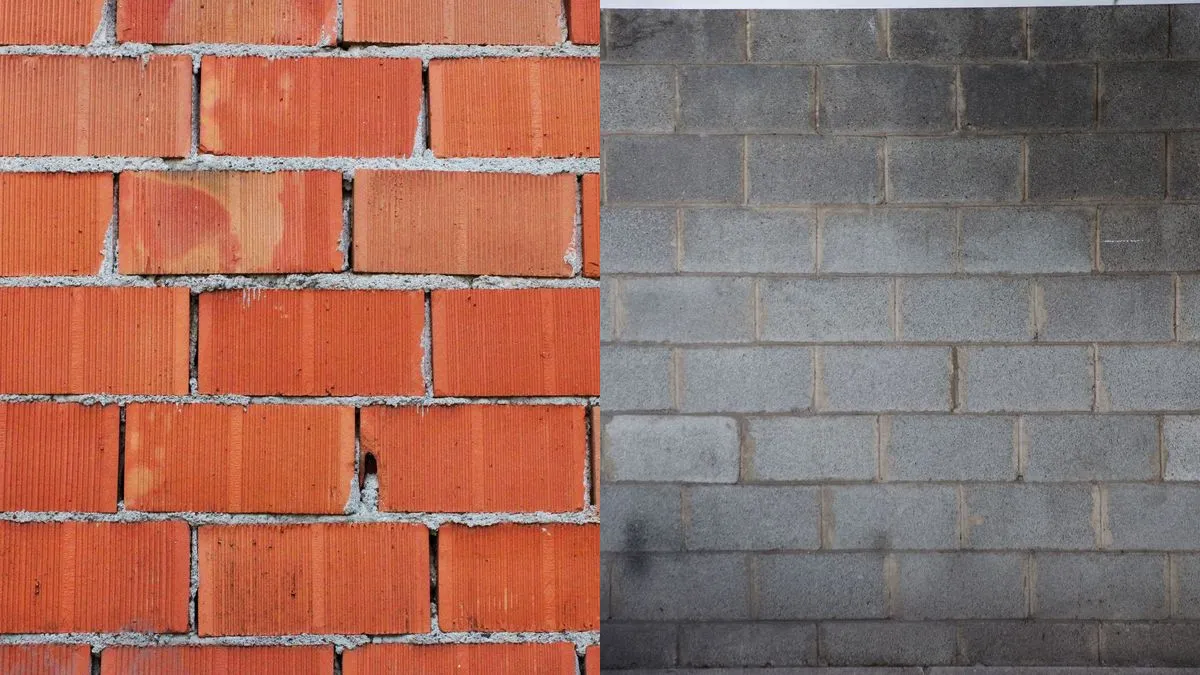
If you’re planning a home on your plot, the wall material is one of the first decisions you’ll face. Ask five people and you’ll get five opinions. Here is how red bricks and solid concrete blocks compare in practice for house construction in Bangalore.
What You’re Actually Comparing
Red bricks are clay bricks fired in kilns. They are the traditional choice, and most older Bengaluru homes were built with them.
Solid concrete blocks are factory-made from cement, aggregate and sand, then cured. They are larger, heavier and far more uniform than bricks.
Strength and Durability
Good concrete blocks usually have higher, more consistent compressive strength. The catch with red bricks is quality: it varies a lot between kilns, and even between batches from the same supplier. A well-fired brick performs beautifully, but an under-burnt one absorbs water and weakens over time.
For multi-storey homes or walls that carry real load, consistency matters. That is where solid blocks often win.
Heat and Comfort
Red bricks insulate better. Clay is naturally slower to pass heat, so rooms stay a little cooler in summer. Concrete is denser and conducts more heat. Bangalore’s climate is milder than most Indian cities, so the difference is real but not dramatic, especially on shaded walls.
Speed and Finish
Solid blocks are larger and dimensionally accurate, so walls go up faster and need less plaster to level. That can save time and reduce mortar wastage. Red brick walls take longer to build and usually need thicker plastering, but the work is familiar to every mason in the city.
Weight and Cost
Solid concrete blocks are heavy, which adds dead load to the structure. This is worth discussing with your structural engineer, especially on upper floors, and it’s one more reason to do soil testing before building a house.
On cost, neither material is automatically cheaper. Brick prices swing with kiln supply, and block prices depend on your location and the supplier. Always compare the full wall cost, including labour, mortar and plaster, rather than the per-piece rate. Our guide to house construction cost in Bangalore shows where material choices fit in your budget, and the cost calculator gives a quick estimate for your plot.
When to Choose Red Bricks
- You want better thermal comfort, such as on a terrace-facing or west-facing wall
- You prefer a traditional build with easy repairs and modifications later
- A trusted supplier can show you consistently well-fired bricks
- It’s a smaller G+1 home where weight isn’t a concern
When to Choose Solid Concrete Blocks
- You need uniform strength across a G+2 or taller build
- Speed matters and you want a faster construction schedule
- You want cleaner, straighter walls with less plaster
- You can get blocks from a reliable manufacturer with proper curing
A Mixed Approach Often Works Best
It’s rarely all or nothing. Many good builds use solid blocks for load-bearing and structural walls, and brick where thermal comfort or ease of modification matters. The right split depends on your plot, floors, budget and orientation.
The Bottom Line
Neither material is “better” in every situation. The better one is the one that suits your plot, your design and your budget, and that is sourced from a supplier you can verify.
The builder you choose matters just as much as the material. A good builder will name every material and brand in writing before work begins, explain why they recommend one over the other, and keep you within budget. If you’re still comparing options, read our guide on how to choose a house construction company in Bangalore that fits your budget before you sign anything.